Adhésifs et Mastics
Aperçu de l'Industrie
Caractéristiques Clés
L’efficacité d’un adhésif dépend de sa capacité à mouiller et à adhérer au substrat. Cela est influencé par l’énergie de surface du substrat, la tension superficielle de l’adhésif et l’état de propreté ou de traitement de la surface. Une mauvaise mouillabilité entraîne des liaisons faibles, des délaminations ou des ruptures sous contrainte.
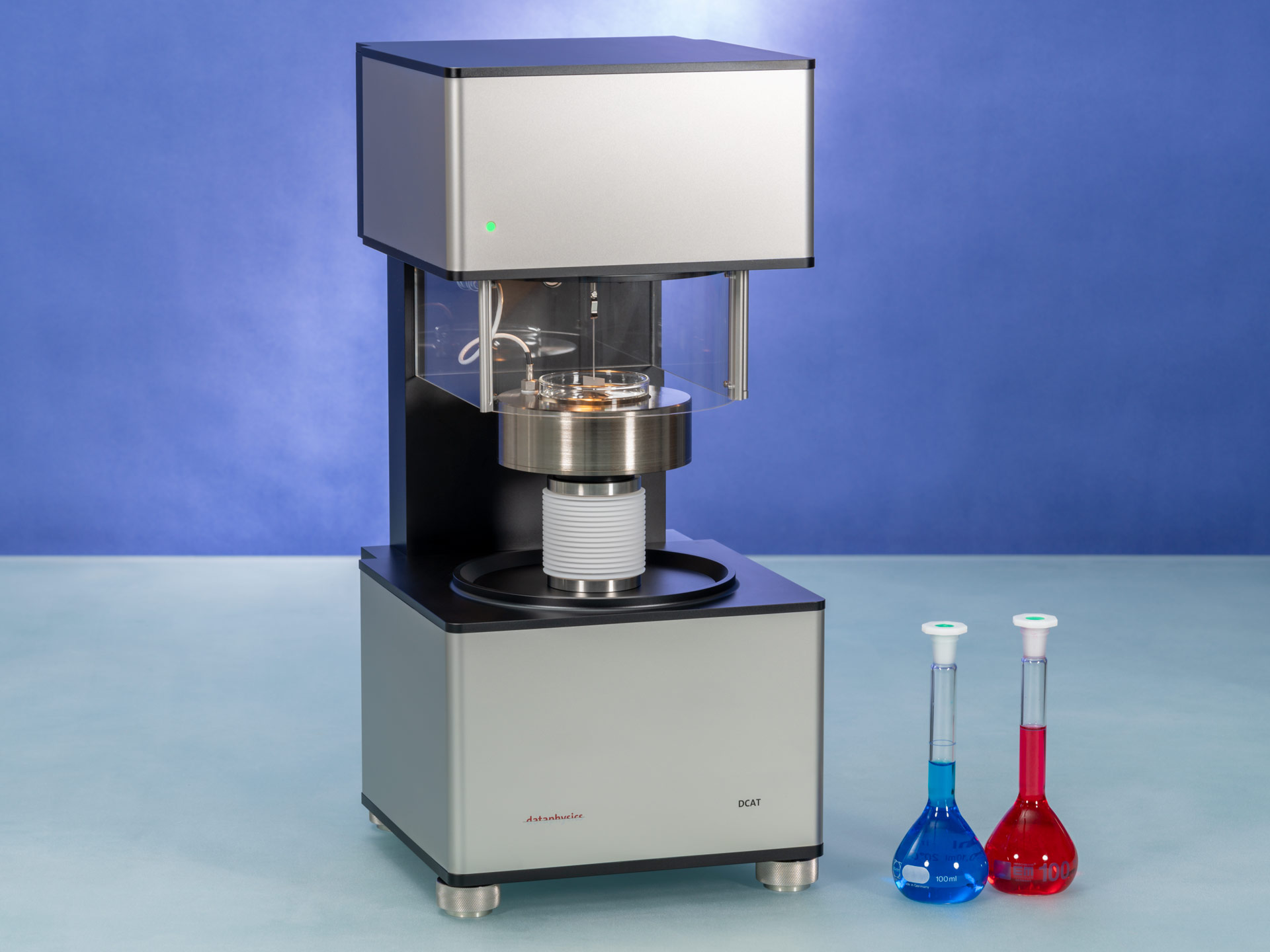
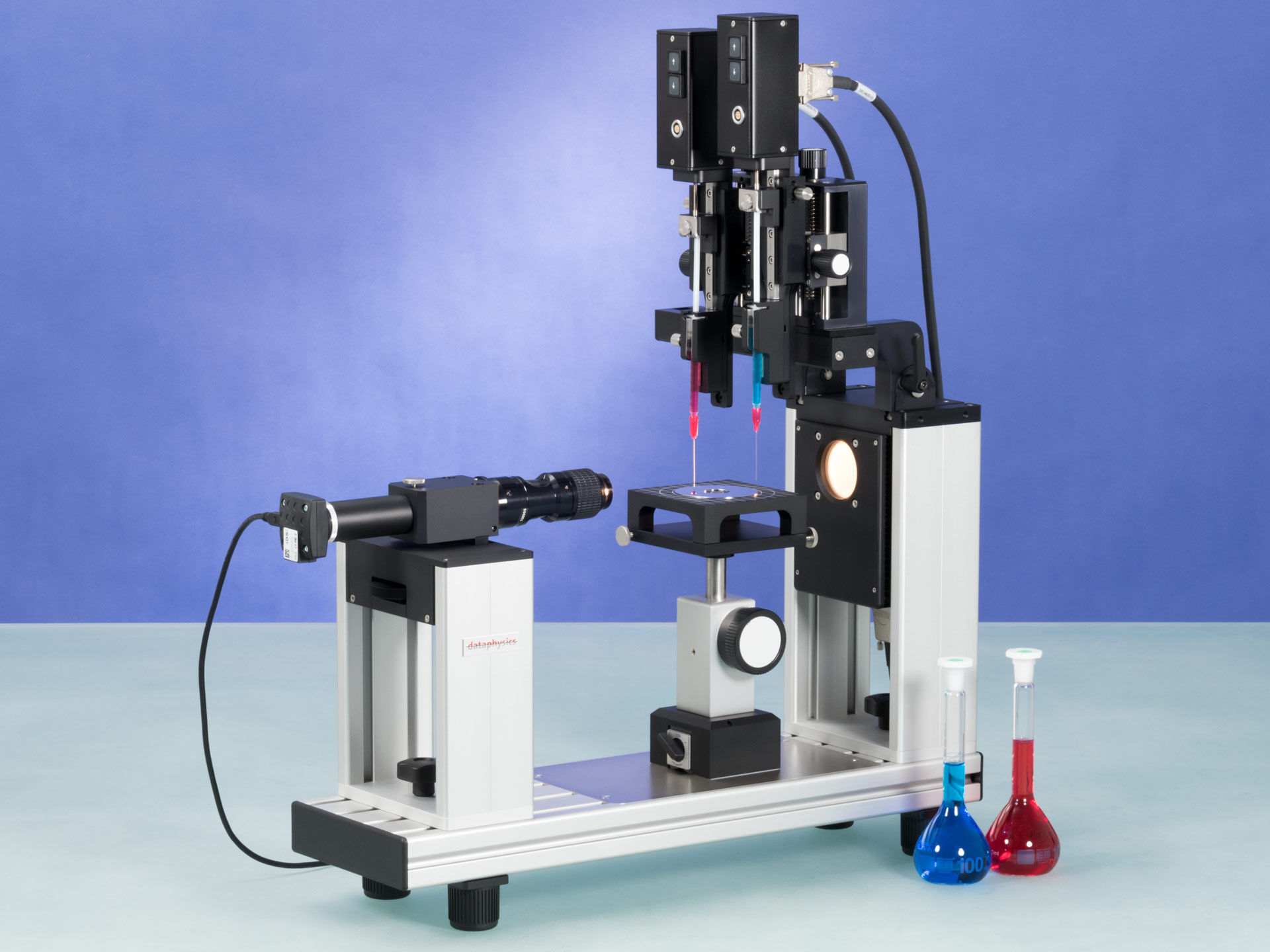
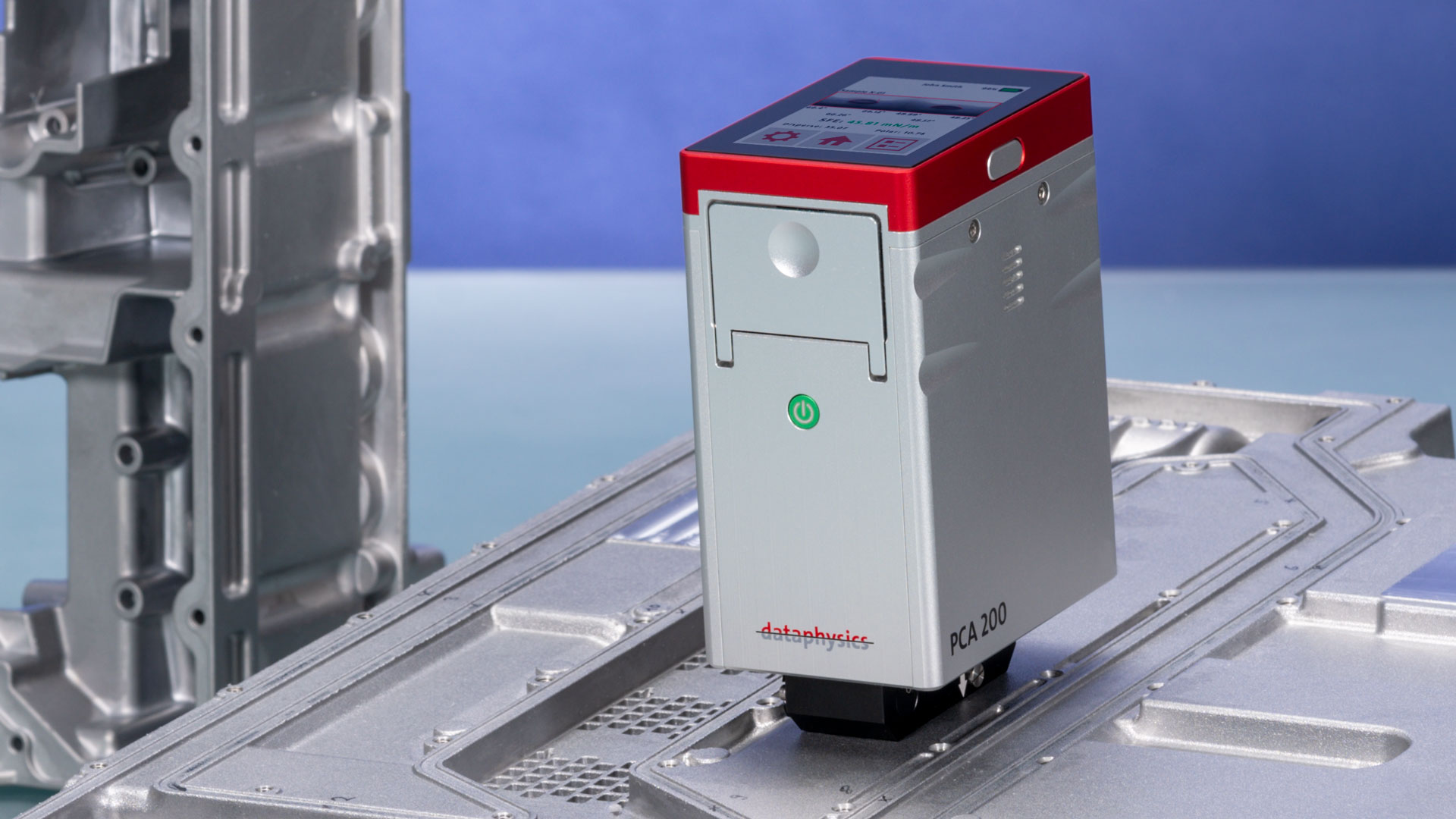
DataPhysics Instruments répond à ces enjeux avec une gamme d’instruments dédiés à la caractérisation des propriétés de surface et d’interface. La série OCA mesure les angles de contact et l’énergie de surface, fournissant des indications sur la capacité d’un adhésif à s’étaler sur une surface donnée. Le tensiomètre DCAT évalue la tension superficielle et la tension interfaciale, essentielles pour comprendre l’interaction entre adhésif et substrat. Le PCA 200 offre une mesure portable de l’angle de contact pour le contrôle qualité sur site.
La préparation de surface est une étape critique : traitements plasma, corona, gravure chimique ou abrasion mécanique augmentent l’énergie de surface et éliminent les contaminants. Les instruments DataPhysics permettent de quantifier l’efficacité de ces traitements en comparant les angles de contact et l’énergie de surface avant et après traitement.
En formulation, la compréhension du comportement rhéologique et interfacial des adhésifs permet d’optimiser la viscosité, l’écoulement et le durcissement. Ainsi, les adhésifs collent efficacement et conservent leurs performances dans le temps et sous conditions variables.
Enfin, les outils DataPhysics soutiennent l’assurance qualité par des mesures reproductibles et intégrables aux flux de production, réduisant la variabilité, améliorant la fiabilité produit et facilitant la conformité aux normes industrielles.
Tests et Applications Typiques
- But : Évaluer la mouillabilité d’un adhésif sur un substrat.
- Application : Prédire la résistance de collage et détecter la contamination de surface.
- Bénéfice : Améliorer la préparation des surfaces et garantir une adhésion cohérente.
- Analyse de l’énergie de surface (SFE) (OCA)
- But : Déterminer les composantes polaires et dispersives de l’énergie de surface.
- Application : Associer adhésifs et substrats pour un collage optimal.
- Bénéfice : Réduire les essais par tâtonnements lors du développement.
- Tension superficielle et tension interfaciale (DCAT)
- But : Mesurer la tension entre l’adhésif et le substrat.
- Application : Évaluer la compatibilité et le comportement d’étalement.
- Bénéfice : Améliorer la mouillabilité et minimiser les défauts (bulles, vides).
- Angle de contact dynamique et hystérésis (OCA, DCAT)
- But : Analyser les angles avancés/reculés et l’hystérésis d’adhésion.
- Application : Comprendre le comportement des adhésifs en conditions dynamiques.
- Bénéfice : Prédire la performance à long terme et les modes de défaillance.
- Enveloppe de mouillage et coefficient d’étalement (logiciel OCA)
- But : Visualiser le comportement de mouillage pour différents adhésifs.
- Application : Sélectionner l’adhésif le plus adapté à une surface donnée.
- Bénéfice : Optimiser la conception produit et réduire le gaspillage de matière
Ressources de l'Industrie
Pas de Ressources Disponibles
Nous mettons à jour notre bibliothèque de ressources pour cette industrie. Revenez bientôt ou contactez-nous pour demander une documentation spécifique.
Demander une DocumentationProduits de Support
 Contact Angle & Surface Tension
DCAT – Appareils de mesure d’angle de contact dynamique et tensiomètre
La série DCAT polyvalente combine des dispositifs de mesure d’angle de contact dynamique et des t...
 Contact Angle & Surface Tension
OCA – Systèmes de mesure d’angle de contact optique et d’analyse de contour
La série OCA de DataPhysics comprend des goniomètres optiques de l’angle de contact haute préci...
 Contact Angle & Surface Tension
PCA – Goniomètre portable d’angle de contact
Le PCA 200 est un goniomètre d’angle de contact portable et compact, conçu pour la mesure auto...
 Oil Analysis
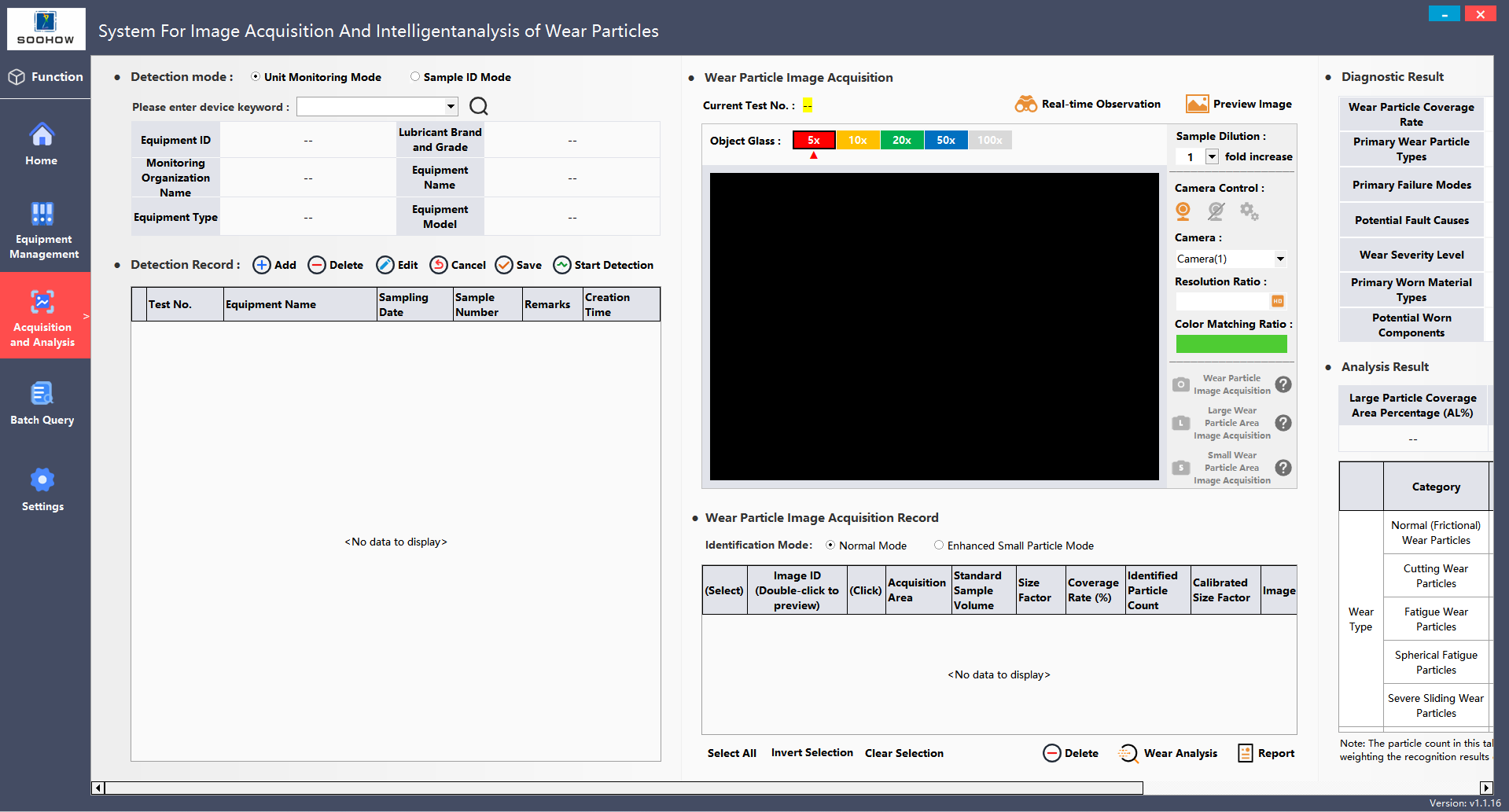
Système d'Acquisition d'Images et d'Analyse Intelligente des Particules d'Usure (Propulsé par l'IA)
Description du Produit Ce système avancé est une solution de pointe pour la ferrographie moderne e...

Prêt à Trouver la Bonne Solution?
Notre équipe peut vous aider à sélectionner les produits parfaits pour vos Adhésifs et Mastics applications